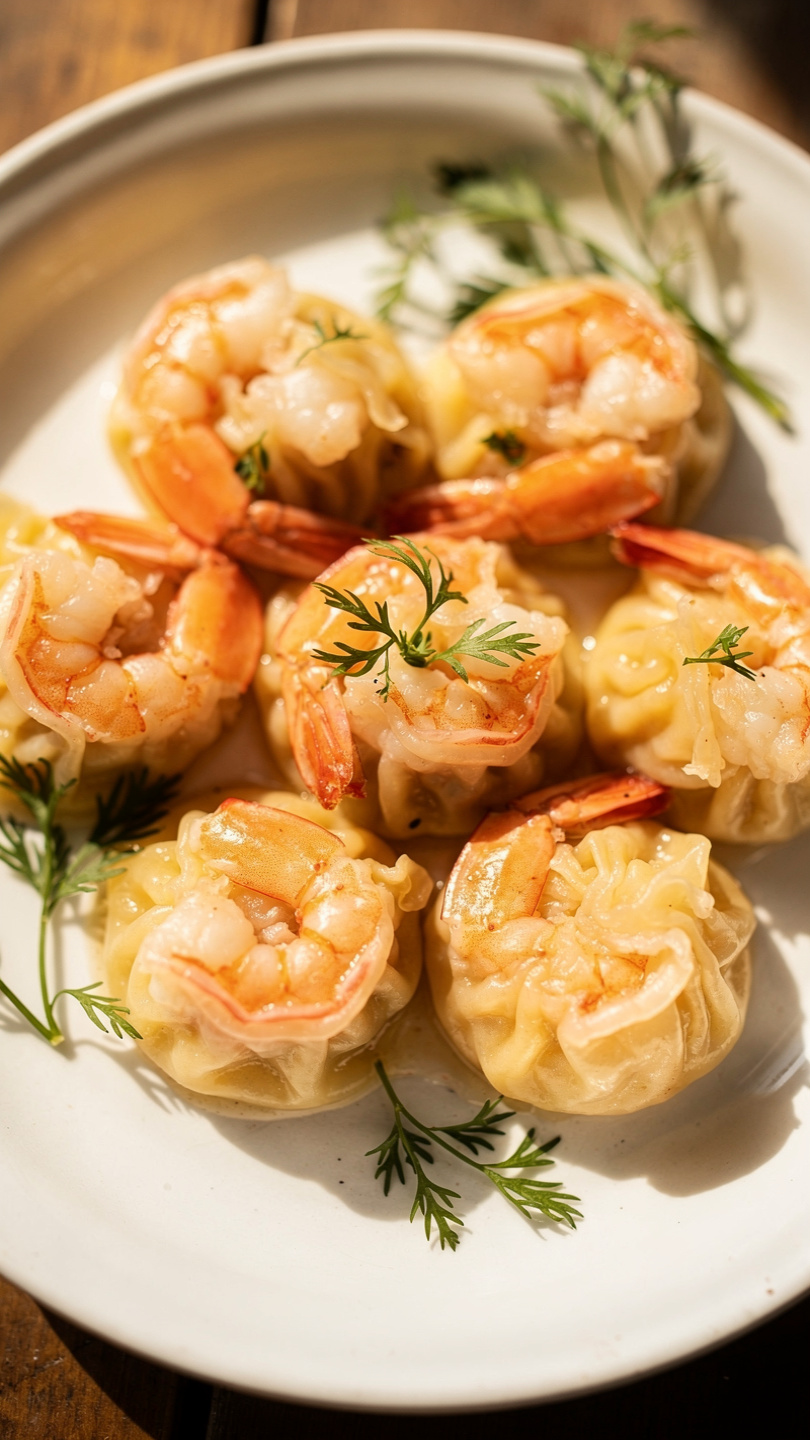
Steamed Shrimp Dumplings (Har Gow)
These classic steamed shrimp dumplings deliver silky, translucent wrappers filled with plump, seasoned shrimp, just like your favorite dim sum restaurant. Quick to make and impressively healthy, they are the perfect addition to any Asian cooking repertoire.

The Dim Sum Classic You Can Finally Make at Home
If you have ever sat at a bustling dim sum restaurant, watching the bamboo steamers roll by and grabbing every basket of har gow you could reach, this recipe is for you. These steamed shrimp dumplings are the gold standard of dim sum recipes: a thin, silky, almost translucent wrapper hugging a juicy, lightly seasoned shrimp filling. They are delicate, satisfying, and genuinely one of the most rewarding things you can learn to make in Chinese cooking.
The good news? They are much more approachable than they look. Once you make them once, you will want to make them every weekend.
Why This Recipe Works
Har gow has a reputation for being difficult, but the real secret is understanding a few key details. The wrapper is made from wheat starch, not regular flour, which is what gives it that beautiful translucency and soft, slightly chewy bite. The filling is kept simple on purpose, because the shrimp is the star. A little bamboo shoot adds crunch, a touch of sesame oil and ginger add fragrance, and white pepper gives it that unmistakable dim sum warmth.
This is also one of the healthiest food dishes you can make at home. Steaming uses no added fat, the shrimp filling is naturally high in protein and low in calories, and the portions are perfectly controlled.
Chef's Tip: The single biggest factor in great har gow is your dough temperature. The boiling water must be truly boiling when it hits the starches. This is what gelatinizes the wheat starch and creates that silky, pliable wrapper. Lukewarm water will give you a crumbly, unworkable mess.
The Right Tools Make All the Difference
For this Asian cooking recipe, your equipment matters almost as much as your ingredients. A proper bamboo steamer stacks beautifully over a wok and allows steam to circulate evenly without condensation dripping back onto your dumplings. A flat-bottomed Chinese cleaver is the traditional tool for pressing the wrappers thin, though a smooth, heavy glass works just as well.
How to Fold Har Gow Like a Pro
The pleated fold is the hallmark of a well-made dumpling, and it is easier to learn by doing than by reading. Here is the simple approach that works for beginners:
- Place the filling slightly off-center on the wrapper, not in the middle.
- Fold the far edge over to meet the near edge, but do not press it shut yet.
- Starting at the right corner, pinch a small fold toward the center and press it against the flat back edge.
- Continue making small, overlapping folds all the way to the left corner.
- Press the entire edge firmly to seal.
Your first few will look rustic. By the time you have finished your first batch of 24, you will be pleating with confidence. Imperfect dumplings taste just as good as perfect ones.
Quick Cooking Tip: Keep your unassembled wrappers covered with a damp towel at all times. The wheat starch dough dries out quickly when exposed to air, and dry wrappers will crack when you try to fold them.
Choosing the Best Shrimp
For quick cooking recipes like this one, ingredient quality makes a noticeable difference. Look for fresh or fresh-frozen large shrimp with a clean, ocean scent. Avoid anything pre-seasoned or with added sodium. Wild-caught shrimp tends to have a firmer, sweeter flavor that really shines in a delicate dumpling filling.
Patting your shrimp completely dry before chopping is essential. Excess moisture in the filling will make your dumplings soggy and cause the wrapper to tear during folding.
Low Calorie, High Reward
One of the best things about these healthy food dishes is how light they actually are. Each serving of six dumplings comes in around 210 calories with 16 grams of protein. You get all the satisfaction of a restaurant dim sum spread without any of the guilt. They pair beautifully with a simple cucumber salad or a bowl of congee to round out the meal.
For a full dim sum spread at home, serve them alongside soy-braised chicken feet, rice noodle rolls, and egg tarts. Or keep it simple and let the har gow be the star.
Ready to make the best steamed shrimp dumplings of your life? Here is everything you need:
Steamed Shrimp Dumplings (Har Gow)
These classic steamed shrimp dumplings deliver silky, translucent wrappers filled with plump, seasoned shrimp, just like your favorite dim sum restaurant. Quick to make and impressively healthy, they are the perfect addition to any Asian cooking repertoire.
Ingredients
- 1 cup wheat starch, also called tang mein flour, not all-purpose flour
- 1/4 cup tapioca starch, plus extra for dusting
- 3/4 cup boiling water, just off the boil
- 1 tsp sesame oil, for the dough
- 3/4 lb large shrimp, peeled, deveined, and patted dry
- 3/8 cup bamboo shoots, finely diced, canned and drained
- 1 tbsp soy sauce, light soy sauce preferred
- 1 tsp sesame oil, for the filling
- 1 tsp fresh ginger, finely grated
- 1 tsp cornstarch, helps bind the filling
- 1/4 tsp white pepper, freshly ground preferred
- 1/2 tsp sugar
- 1/2 tsp salt
- 2 tbsp chili oil or soy sauce, for dipping, to serve
Instruction
Make the dough: Whisk the wheat starch and tapioca starch together in a large heatproof bowl. Pour the boiling water over the starches all at once and stir vigorously with a wooden spoon until a shaggy dough forms.
Add the sesame oil and knead the dough in the bowl for about 1 minute until it is smooth and pliable. It should feel soft like Play-Doh and not stick to your hands. Cover with a damp towel and rest for 10 minutes.
Make the filling: Roughly chop two-thirds of the shrimp into small pieces. Leave the remaining third as larger chunks for texture. Combine all the shrimp with the bamboo shoots, soy sauce, sesame oil, ginger, cornstarch, white pepper, sugar, and salt. Stir in one direction for about 1 minute until the mixture becomes slightly sticky. Refrigerate while you prepare the wrappers.
Divide and roll the wrappers: Divide the rested dough into 4 equal portions. Work with one portion at a time, keeping the rest covered. On a lightly tapioca-dusted surface, roll the dough into a log and cut into 6 equal pieces. Using a lightly oiled Chinese cleaver or a flat-bottomed glass, press each piece into a round approximately 3 to 3.5 inches in diameter. The wrapper should be thin enough to be slightly translucent.
Fill and fold the dumplings: Place about 1 heaping teaspoon of filling slightly off-center on each wrapper. Fold the wrapper in half over the filling. Starting at one end, make small overlapping pleats along the curved edge to seal. Press firmly to ensure there are no gaps. Repeat with the remaining dough and filling to make about 24 dumplings.
Steam the dumplings: Line a bamboo steamer with parchment paper or napa cabbage leaves and lightly oil the surface. Arrange the dumplings in the steamer, leaving about half an inch of space between each one. Bring a wok or pot of water to a rolling boil. Place the steamer over the boiling water, cover tightly, and steam for 8 to 10 minutes until the wrappers turn translucent and the shrimp filling is fully opaque and pink.
Serve immediately with chili oil or soy dipping sauce on the side.
Equipment
- Bamboo steamer (2-tier preferred)
- Wok or large pot
- Large heatproof mixing bowl
- Chinese cleaver or flat-bottomed glass for pressing
- Parchment paper or napa cabbage leaves
- Wooden spoon
- Sharp knife and cutting board
Notes
Serving, Storing, and Making Ahead
Har gow is always best straight out of the steamer, while the wrappers are still silky and soft. Set out small dishes of chili oil, light soy sauce, or black vinegar for dipping, and serve in the bamboo steamer baskets for a beautiful presentation.
If you are cooking for a crowd, these are ideal for a make-ahead plan. Assemble all your dumplings earlier in the day, keep them covered in the fridge, and steam them in batches right before serving. You can also freeze them flat and cook from frozen whenever a dim sum craving strikes.
Once you have this dumpling recipe in your rotation, you will find yourself making them again and again, tweaking the filling, perfecting the pleats, and sharing them with everyone you know.