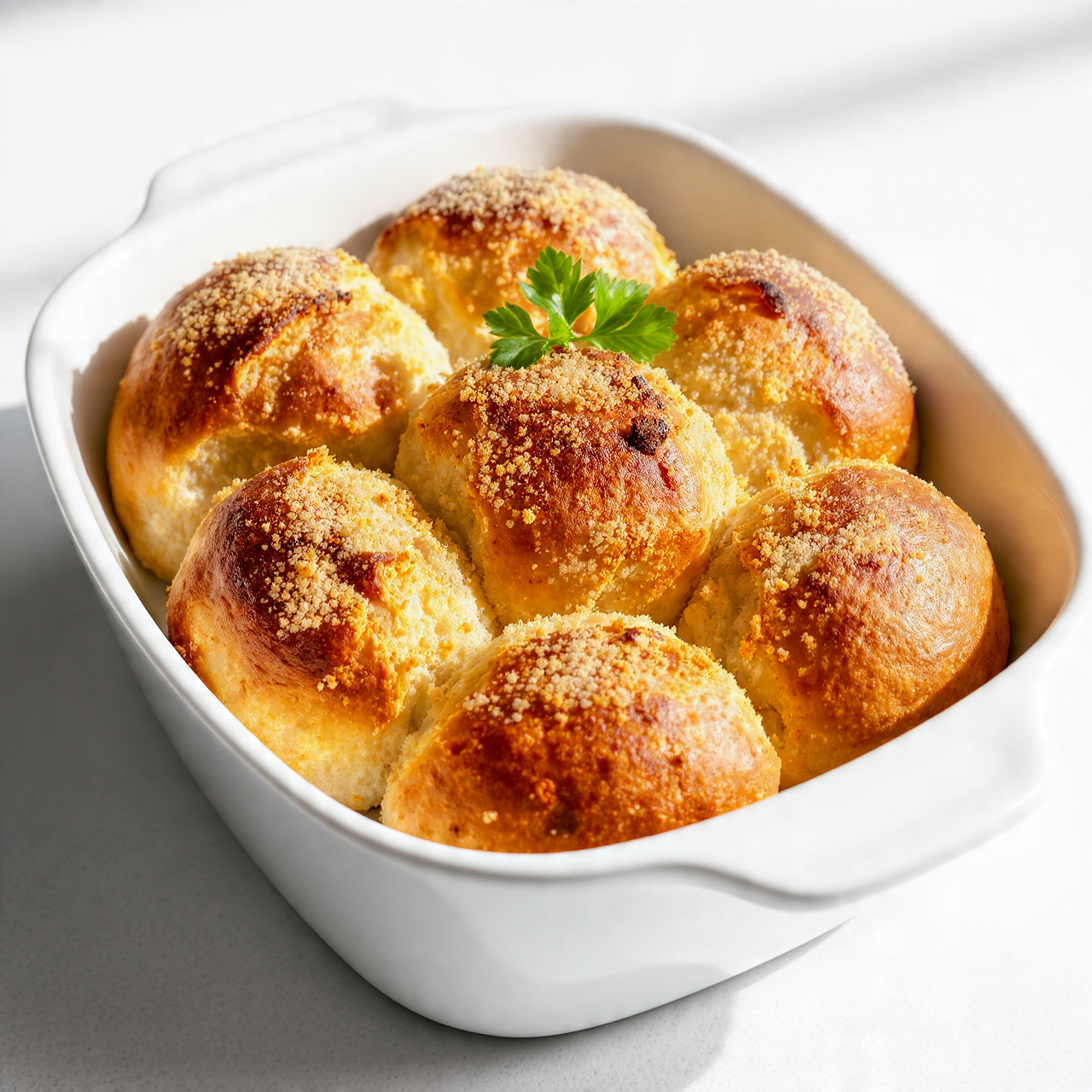
Filipino Spanish Bread: Soft, Buttery Rolls with a Sweet Filling
These pillowy Filipino Spanish Bread rolls are stuffed with a rich, buttery brown sugar filling and baked to golden perfection. A beloved Filipino bakery classic you can finally make at home.

The Filipino Bakery Classic That Deserves a Spot in Your Kitchen
If you grew up Filipino or have ever wandered into a Filipino panaderia, you already know the pull of a warm Spanish Bread roll. That soft, pillowy dough, the sweet buttery filling that caramelizes just slightly at the edges, and that golden breadcrumb coating with just a little crunch. It is the kind of thing that disappears from the bread basket before anyone sits down.
This Filipino Spanish Bread recipe captures everything you love about the bakery version, and it is completely doable at home on a weekend morning.
What Makes Filipino Spanish Bread So Special
Despite the name, Spanish Bread is not Spanish at all. It is a proudly Filipino creation, a fixture of the panaderia tradition that has fed Filipino families for generations alongside classics like pandesal and ensaymada. The name is a bit of a delicious mystery, but the roll itself is unmistakable.
What sets it apart from other filled rolls:
- An enriched dough made with eggs, butter, and milk for that signature softness
- A brown sugar butter filling that stays gooey in the center but crisps ever so slightly where it meets the dough
- A breadcrumb coating on the outside, which is the detail that makes a Spanish Roll unmistakably itself
Some bakers call these Senorita Bread or use the term interchangeably. Whatever name you know them by, the Filipino Spanish Bread filling recipe is the soul of the whole thing.
Getting the Right Tools and Ingredients
For the best results, bread flour is worth seeking out over all-purpose. The higher protein content builds a stronger gluten network, giving you that soft but slightly chewy crumb that holds the filling without becoming bready or dense. A stand mixer with a dough hook makes kneading effortless, though hand kneading works fine with a little patience.
The Filling: Simple, Rich, and Non-Negotiable
The Spanish Bread filling recipe is beautifully simple: softened butter, dark brown sugar, and a small amount of flour. The flour is the secret ingredient here. It binds the filling so it does not all melt out during baking and leak onto the pan. Use dark brown sugar for a deeper molasses flavor, though light brown sugar works in a pinch.
Chef's Tip: Make sure your butter is genuinely soft and spreadable before mixing the filling. Cold butter will leave you with lumps, and melted butter will make the filling too runny to roll.
Shaping the Rolls: The Fun Part
Once your dough has had its first rise, the shaping process is satisfying and straightforward. Think of it like rolling a tiny cinnamon roll, but without any spiral visible from the outside.
Here is what to keep in mind during the Spanish Bread making guide:
- Flatten each piece into an oval, not a perfect circle. The elongated shape makes rolling much easier.
- Leave a border around the edges when spreading the filling. This prevents blow-outs in the oven.
- Roll it firmly from the bottom up, then pinch that seam hard. Give it a little press against your work surface to seal.
- Roll in breadcrumbs immediately while the surface is still slightly tacky from handling.
The breadcrumb coating is what transforms these from a generic sweet roll into something distinctly Filipino. Do not skip it.
Ready to bake a batch? Here is everything you need:
Filipino Spanish Bread: Soft, Buttery Rolls with a Sweet Filling
These pillowy Filipino Spanish Bread rolls are stuffed with a rich, buttery brown sugar filling and baked to golden perfection. A beloved Filipino bakery classic you can finally make at home.
Ingredients
- 3 cups bread flour, plus extra for dusting
- 2 1/4 tsp instant dry yeast, one standard packet
- 1/4 cup granulated white sugar, for the dough
- 3/4 tsp salt
- 3/4 cup whole milk, warmed to about 110 degrees F
- 2 large eggs, room temperature
- 4 tbsp unsalted butter, softened, for the dough
- 6 tbsp unsalted butter, softened, for the filling
- 1/2 cup dark brown sugar, packed, for the filling
- 3 tbsp all-purpose flour, for the filling, helps it bind
- 1/2 cup breadcrumbs, plain, for rolling the outside
Instruction
Make the dough: In a large bowl or the bowl of a stand mixer, combine the bread flour, instant yeast, sugar, and salt. Stir briefly to combine.
Add the warmed milk and eggs to the dry ingredients. Mix on low speed (or by hand) until a shaggy dough forms.
Add the softened butter one tablespoon at a time, mixing after each addition. Increase speed to medium and knead for 8 to 10 minutes until the dough is smooth, elastic, and slightly tacky but not sticky.
Shape the dough into a ball and place it in a lightly greased bowl. Cover with plastic wrap or a clean kitchen towel and let it rise in a warm spot for 1 to 1.5 hours, until doubled in size.
While the dough rises, make the filling: Beat together the softened butter, dark brown sugar, and all-purpose flour until well combined and spreadable. Set aside at room temperature.
Punch down the risen dough and turn it out onto a lightly floured surface. Divide it evenly into 16 pieces. Cover loosely and let rest for 10 minutes.
Working with one piece at a time, use a rolling pin or your hands to flatten each piece into a rough oval about 5 inches long.
Spread a generous tablespoon of the butter-brown sugar filling across the surface of the dough, leaving a small border at the edges.
Starting from the bottom, roll the dough up tightly away from you like a small log. Pinch the seam firmly to seal.
Pour the breadcrumbs onto a shallow plate. Lightly brush or roll each roll in the breadcrumbs to coat the outside evenly. Place seam-side down on a parchment-lined baking sheet, spacing them about 1.5 inches apart.
Cover the shaped rolls loosely and let them rise for another 30 to 45 minutes until puffed.
Preheat your oven to 350 degrees F (175 degrees C) during the second rise.
Bake for 18 to 22 minutes, until the tops are light golden and the breadcrumb coating looks toasted. Do not overbake as these rolls are meant to stay soft.
Remove from the oven and let cool on the pan for at least 10 minutes before serving. They are best enjoyed warm.
Equipment
- Stand mixer with dough hook or large mixing bowl
- Rolling pin
- Parchment-lined baking sheet
- Plastic wrap or clean kitchen towel
- Shallow plate for breadcrumbs
- Pastry brush
Notes
Serving, Storing, and Variations
Spanish Bread is best enjoyed warm, fresh from the oven, with a cup of hot coffee or salabat (Filipino ginger tea). In Filipino households, it is a classic merienda (afternoon snack) treat, but there is truly no wrong time to eat one.
For storage, keep any leftovers in an airtight container at room temperature and reheat gently before serving. A quick microwave blast in a damp paper towel for 15 seconds does the trick.
Want to experiment with your Spanish Bread baking ideas? Try these simple variations:
- Ube filling: Swap the brown sugar mixture for ube halaya (purple yam jam) for a vibrant, earthy twist
- Cheese and sugar: Sprinkle a little shredded quick-melt cheese into the filling before rolling for that sweet-salty Filipino combination
- Pandan dough: Add a teaspoon of pandan extract to the dough for a fragrant, green-tinted version
However you make them, this Filipino Spanish Bread recipe brings a little piece of the panaderia right into your home kitchen. Once you try them fresh from your own oven, the bakery version will never quite hit the same way.