Savory Herb Bread: The Most Impressive Loaf You'll Ever Pull From Your Oven
This savory herb bread is golden, fragrant, and packed with garlic and fresh herbs, making it the ultimate dinner table centerpiece that doubles as a show-stopping side.

The Bread That Makes Your Whole Kitchen Smell Like a Bakery
There is a moment, about halfway through baking this savory herb bread, when the smell of roasted garlic and warm rosemary drifts through your kitchen and everyone in the house suddenly appears wanting to know what is for dinner. That moment is the whole point.
This is not your average sandwich loaf. It is a garlic and herb bread built for the dinner table, the kind of pretty bread recipe that looks like it came from a serious bakery but requires nothing more than pantry staples, a little patience, and one genuinely satisfying hour of hands-on work. Whether you are hunting for bold herb dinner recipes, browsing alternative bread recipes to break out of a rut, or just searching for a bread idea that feels a little special on a Tuesday night, this loaf delivers every single time.
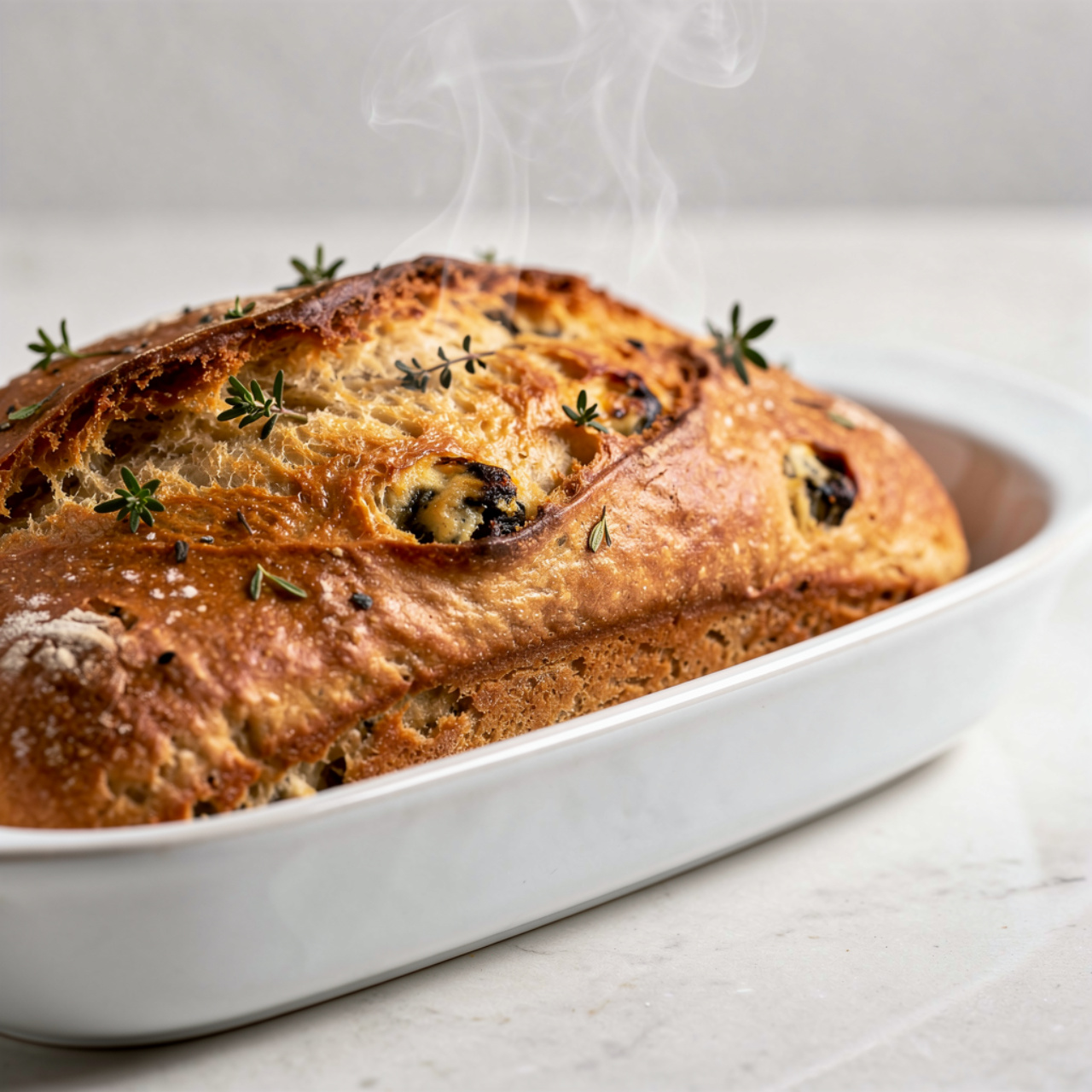
The dough is soft and pillowy. The herb butter swirled through the center and slicked across the top is fragrant and rich. The crust is crackly and golden. It is, in the best possible way, a lot.
Why This Herb Bread Works So Well
The secret to a great savory loaf is layering flavor at every stage. We are not just mixing herbs into the dough and calling it a day. Instead, we build an herb compound butter with fresh rosemary, thyme, parsley, and lots of minced garlic, then we spread it inside the rolled dough and on top before baking. The result is swirled pockets of herby richness throughout every slice.
The bread base itself is a simple, forgiving yeasted dough, the kind that is genuinely great for anyone exploring advanced bread recipes without wanting to wade into sourdough territory quite yet. It kneads beautifully, rises reliably, and bakes up with a satisfying crust.
Chef's Tip: Do not skip the second rise. That 20-to-25-minute rest after shaping is what gives the loaf its light, airy crumb instead of a dense, bready interior. It is worth every minute.
Fresh Herbs vs. Dried: What You Need to Know
For this recipe, fresh herbs make a real difference, especially the rosemary and parsley. Fresh rosemary has a resinous, almost piney brightness that dried rosemary can only approximate. Fresh parsley brings a clean, grassy note that keeps the whole loaf from tasting too heavy.
That said, dried rosemary and dried thyme are perfectly acceptable substitutes if that is what you have on hand. Just remember the rule: use one-third the amount of dried herbs compared to fresh. So one tablespoon of fresh rosemary becomes one teaspoon of dried.
Using quality olive oil and real butter in the herb mixture also matters more than you might expect. This is a bread idea where the fats are doing real flavor work, not just lubricating the dough.
Getting the right tools and a few quality pantry staples genuinely elevates this garlic and herb bread baking project from good to bakery-level great:
Shaping the Loaf: The Roll-and-Swirl Method
Once the dough has completed its first rise, we use a simple roll-and-swirl technique to get those beautiful herb layers inside the loaf. Think of it like rolling a cinnamon roll, but savory.
Here is how it goes:
- Roll the punched-down dough into a rough rectangle, about 10 inches long
- Spread three-quarters of the herb butter generously over the surface
- Roll it up tightly from the short end, just like a jelly roll
- Pinch the seam firmly, place it seam-side down in the pan, and let it puff back up
The remaining herb butter gets brushed over the top right before it goes into the oven, which is what creates that gorgeous, deeply golden, slightly crisped top crust. A sprinkle of flaky sea salt and optional parmesan over the top is the finishing touch that makes this loaf look genuinely pretty, the kind of bread ideas for dinner that earn compliments before anyone even takes a bite.
Chef's Tip: An instant-read thermometer is your best friend here. Pull the bread when the center hits 190 to 200 degrees F. Color alone can be misleading, especially if your oven runs hot.
Ready to bake? Here is the full recipe with every detail you need:
Savory Herb Bread: The Most Impressive Loaf You'll Ever Pull From Your Oven
This savory herb bread is golden, fragrant, and packed with garlic and fresh herbs, making it the ultimate dinner table centerpiece that doubles as a show-stopping side.
Ingredients
- 3 cups all-purpose flour, plus more for dusting
- 2 1/4 tsp instant yeast, one standard packet
- 1 cup warm water, between 100 and 110 degrees F
- 3 tbsp olive oil, extra virgin, divided
- 3 tbsp unsalted butter, softened
- 4 garlic cloves, finely minced
- 1 tbsp fresh rosemary, finely chopped
- 1 tbsp fresh thyme leaves, stripped from stems
- 2 tbsp fresh flat-leaf parsley, finely chopped
- 1 1/2 tsp kosher salt
- 1 tsp sugar, to activate the yeast
- 1/2 tsp flaky sea salt, for topping
- 1/4 cup shredded parmesan, optional, for topping
Instruction
In a small bowl, combine the warm water, sugar, and instant yeast. Stir gently and let it sit for 5 minutes until foamy. If it does not foam, your water was too hot or too cold, and the yeast should be replaced.
In a large mixing bowl, whisk together the flour and kosher salt. Make a well in the center and pour in the yeast mixture and 2 tablespoons of the olive oil.
Stir with a wooden spoon until a shaggy dough forms, then turn it out onto a lightly floured surface and knead for 8 to 10 minutes until the dough is smooth, elastic, and just slightly tacky. Alternatively, use a stand mixer fitted with a dough hook on medium speed for 6 minutes.
Lightly grease the mixing bowl with the remaining 1 tablespoon of olive oil. Place the dough in the bowl, turn it to coat, and cover tightly with plastic wrap or a damp kitchen towel. Let it rise in a warm spot for 1 hour, or until doubled in size.
While the dough rises, make the herb butter by combining the softened butter, minced garlic, rosemary, thyme, and parsley in a small bowl. Mix until fully incorporated and set aside.
Preheat your oven to 400 degrees F (200 degrees C). Lightly grease a 9x5-inch loaf pan or line a baking sheet with parchment paper.
Punch down the risen dough and turn it out onto a lightly floured surface. Roll or pat it into a rough rectangle about 10 inches long. Spread three-quarters of the herb butter evenly over the surface of the dough.
Roll the dough tightly from the short end into a log, pinch the seam shut, and place it seam-side down in the prepared loaf pan. Cover loosely and let it rise for another 20 to 25 minutes until puffy.
Spread the remaining herb butter over the top of the loaf. Sprinkle with flaky sea salt and parmesan if using.
Bake for 30 to 35 minutes until deep golden brown and the internal temperature reads 190 to 200 degrees F on an instant-read thermometer. If the top browns too quickly, tent loosely with foil during the last 10 minutes.
Remove from the oven and let the bread cool in the pan for 10 minutes before transferring to a wire rack. Slice and serve warm.
Equipment
- Large mixing bowl
- Small mixing bowl
- Wooden spoon or stand mixer with dough hook
- 9x5-inch loaf pan
- Plastic wrap or damp kitchen towel
- Instant-read thermometer
- Wire cooling rack
- Pastry brush
Notes
Serving, Storing, and Endless Variations
This savory herb bread is spectacular served warm, pulled apart at the table alongside a simple pasta, a roasted chicken, or a big green salad. It is also one of those bakery breads that holds up beautifully as a base for a really good piece of toast the next morning, dragged through a soft-boiled egg or topped with a thick smear of ricotta.
Serving ideas to try:
- Alongside a bowl of tomato soup or minestrone
- Sliced thick and served with whipped herbed butter on the side
- As the base for an open-faced bruschetta with roasted tomatoes
- Toasted and served with a cheese board as an appetizer
Variations worth exploring:
- Swap the rosemary and thyme for fresh basil and sun-dried tomatoes for an Italian spin
- Add a handful of shredded sharp cheddar into the herb butter for a cheesy pull-apart version
- Use everything bagel seasoning on top instead of flaky salt for a fun twist
- Mix in a tablespoon of black olive tapenade with the herb butter for a Mediterranean take
For storage, wrap leftover bread tightly in foil and keep it at room temperature for up to two days. Sliced and frozen, it lasts up to two months and toasts beautifully straight from the freezer. This is genuinely one of those bread for dinner recipes that earns a permanent spot in your rotation.